Residential & Commercial Service
Texture Matching in Colorado Springs
Knockdown, orange peel, skip trowel, and hand-troweled finishes replicated and blended so the repair disappears — texture, paint color, and sheen all matched to the wall around it.
Overview
What texture matching actually involves
Texture matching is the process of recreating the surface pattern of an existing wall or ceiling over a repair, so the patched area reads as part of the same surface instead of a fixed spot. It matters because the eye rarely catches the patch itself — it catches the difference in texture. A smooth rectangle on a knockdown wall, or a heavy spray next to a fine orange peel, shows under any raking light, and Colorado Springs' strong, direct sunlight makes it even more obvious.
The need usually comes from an earlier repair — a patched hole, a water damage rebuild, a crack that was taped and skimmed — where the board work was done well but the finish was left flat or sprayed without matching what was already there. It also comes up after popcorn ceiling removal, where a section has to be blended into an older textured surface, and in older neighborhoods like the Old North End, where hand-troweled finishes can't be replicated with a hopper gun.
Done properly, the match covers texture and paint together: the pattern is applied in test passes and adjusted until it sits seamlessly against the original, then checked against the existing paint's color and sheen so nothing telegraphs once the light hits it.
Our process
How we match wall and ceiling texture
Four steps, in the same order every time — from a single smooth patch to a full wall blend.
Study the existing texture first
Before any mud goes on the wall, we look at how the original texture was made — spray pattern or hand-troweled, droplet size, how far it was knocked down, and how many years of paint have softened its edges. That tells us the tools, compound consistency, and technique the match will need, because no two walls take the same approach.
Feather the patch past the repair
Texture that starts abruptly at the edge of a patch reads as a patch. The joint compound is feathered in wide, thin passes well beyond the repair area, then sanded under raking light so there's no ridge for the texture to catch on. This step is what makes the difference between a repair that disappears and one that shows under direct sunlight.
Apply texture in test passes, not one shot
Knockdown, orange peel, and skip trowel are applied in small test passes on the repair and adjusted — air pressure, mud consistency, trowel timing — until the new texture sits indistinguishably against the old. Hand-troweled finishes in older homes are replicated by hand rather than sprayed, since machine-applied texture behaves differently.
Match paint color and sheen
Texture is only half the match. Once it's dry, we check the existing paint for sheen and sun fading — common on south- and west-facing walls here — and either blend into it or recommend repainting the full wall corner to corner so the eye has no seam to land on.
Before & after
A mismatched texture patch re-blended until it disappears into the surrounding wall.
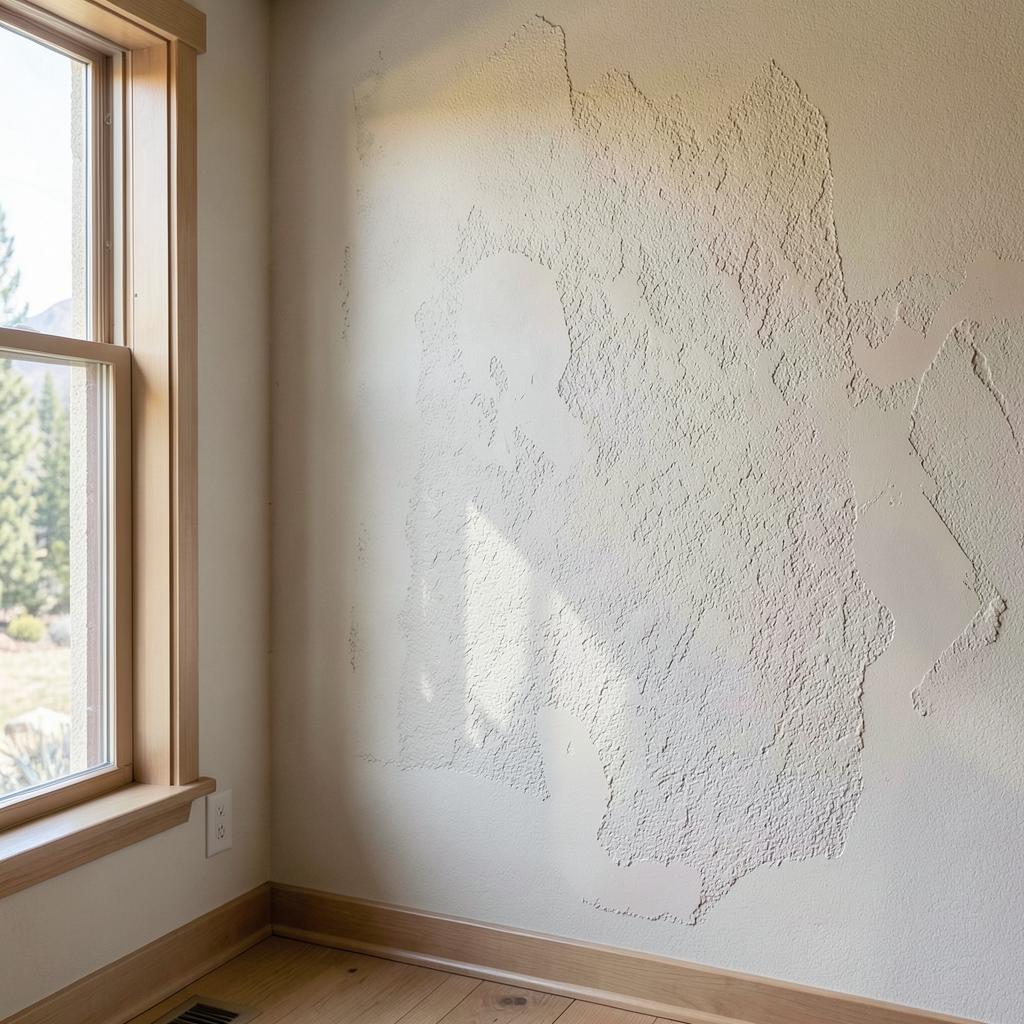 Before
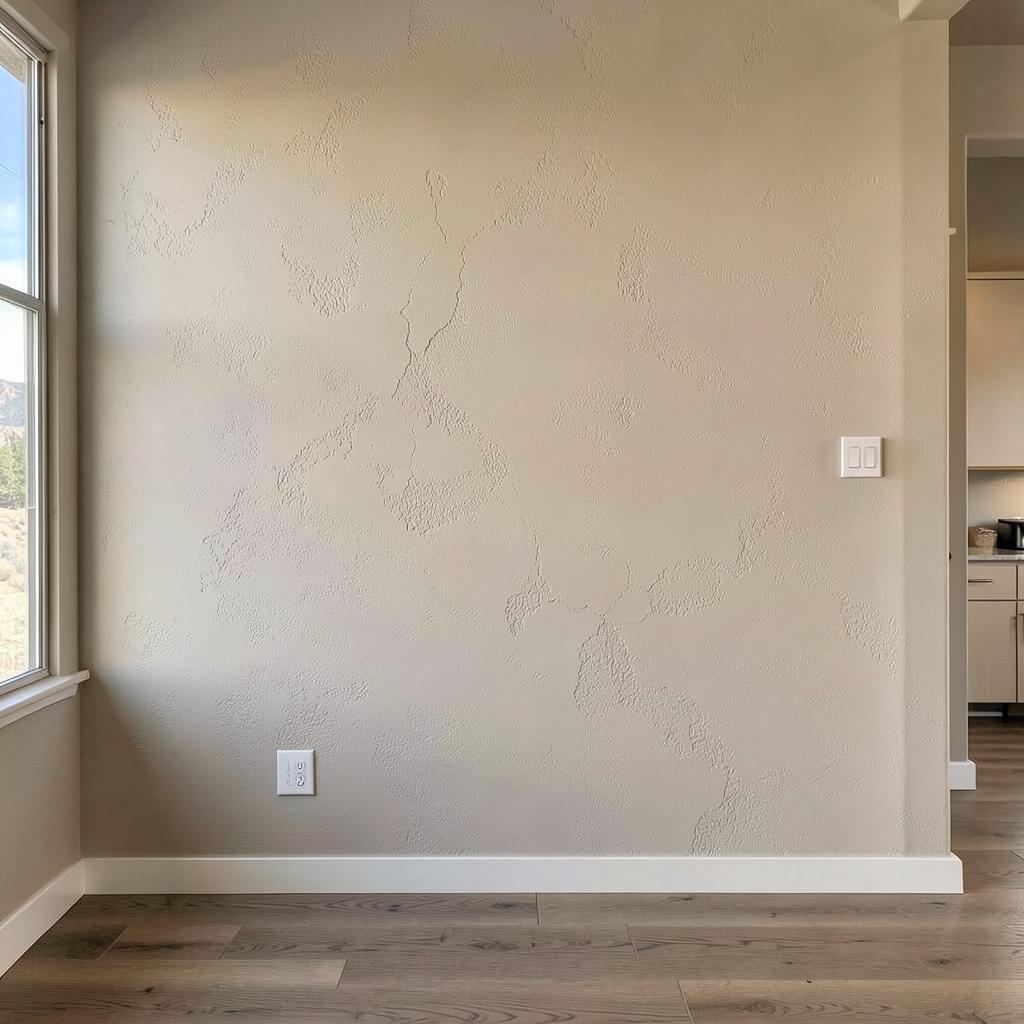 After
AfterWhen to call
Signs you need texture matching
A smooth patch on a textured wall
If a past repair was left smooth while the rest of the wall has knockdown or orange peel, it will keep catching the light no matter how well it's painted. Re-texturing the patch to match makes it disappear.
New texture that doesn't match the old
A repair where the texture was sprayed heavier, finer, or flatter than the surrounding wall shows up most under Colorado Springs' strong direct sunlight. That mismatch can be skimmed back and re-blended.
Visible seams after a repair settles
As joint compound dries and shrinks, edges and seams can telegraph through texture. If a repair that looked fine at first is starting to show lines, it needs a proper feather-and-blend pass before paint.
Texture matching questions, answered
Why does texture matching matter so much for a repair?
Patching the hole is only half the job. The reason repairs stand out is almost always the texture, not the patch underneath it. If the wall around the repair has knockdown or orange peel texture and the patch is left smooth, it will show, especially under the kind of strong, direct sunlight common in Colorado Springs.
What texture styles can you match?
We work with the textures typically found in Colorado Springs homes, from knockdown and orange peel to skip trowel and smooth Level 5 finishes. Older homes in areas like the Old North End often have hand-troweled texture, which we replicate by hand rather than spraying, since it behaves differently than a machine-applied finish.
Does the dry Colorado climate affect how texture is applied?
It can. Lower humidity and higher altitude change how quickly joint compound sets up, which affects how texture is applied and how long it takes to dry properly before painting. We adjust our mud consistency and timing to account for that, rather than using the same approach we'd use at sea level.
Will the paint match too, or just the texture?
Both matter. A perfectly matched texture can still look off if the paint sheen or color doesn't line up with the rest of the wall. We check the existing paint and either blend into it directly or suggest repainting the full wall if sun fading has shifted the color over time.
Related services
Other drywall work we handle
Texture matching often follows one of these repairs. See all of our Colorado Springs drywall repair services.
- Drywall Patching Colorado Springs
- Ceiling Repair Colorado Springs
- Water Damage Repair Colorado Springs
- Popcorn Ceiling Removal Colorado Springs
- Commercial Drywall Colorado Springs
Get a free texture matching quote
Send a few details — or a photo of the wall in good light — and we'll follow up the same business day with a free estimate. A close-up and a wider shot of the room help us identify the texture before we arrive.
719-359-5208