Residential & Commercial Service
Ceiling Repair in Colorado Springs
Sagging panels, stress cracks, nail pops, and water stains repaired the way ceilings demand — re-secured to the framing, floated flat, retextured, and painted so nothing shows under raking light.
Overview
What ceiling repair actually involves
Ceiling repair is the most unforgiving drywall work there is. Light hits a ceiling at a low, raking angle from windows and fixtures, so a ridge, a dip, or a texture that doesn't quite match becomes a shadow line you can see from across the room. A repair that would vanish on a wall can be obvious overhead, which is why ceilings take more feathering, more sanding between coats, and more care with texture than any other surface in the house.
Most ceiling calls in Colorado Springs come from a short list of causes: truss-uplift cracks along the wall line as framing shifts with the seasons, nail pops as fasteners back out of drying lumber, sagging panels that were under-fastened to begin with, and water stains from roof leaks and ice dams during freeze-thaw weeks. The dry air and big day-to-night temperature swings out here make all of these more common than in milder climates.
A lasting repair starts by fixing whatever caused the damage — re-securing the panel to the joists, replacing a compromised section, or dealing with the moisture source — before any mud goes on. Done in that order, the repair holds structurally and disappears visually.
Our process
How we repair ceilings
Four steps, in the same order every time — from a single stress crack to a full sagging panel.
Diagnose what caused the damage
A ceiling crack that keeps coming back has a cause that hasn't been fixed yet. We work out whether the damage is a truss-uplift crack riding the wall line, fasteners backing out, a sagging panel that's losing its grip on the joists, or an old roof-leak stain — because each one gets a different repair, and treating a movement crack like a simple patch means you'll be looking at it again next winter.
Re-secure the drywall to the framing
Any ceiling section that moves has to hold structurally before it's worth finishing. Popped nails get removed rather than driven back in, panels are pulled tight to the joists with drywall screws, and sagging sections are either re-fastened or cut out and replaced with board of matching thickness so the plane of the ceiling stays flat.
Tape and float thin, feathered coats
Seams and cracks get taped and coated with joint compound applied thin and feathered wide — several feet out on a ceiling — with sanding between each coat. Thin coats shrink less, sand flatter, and don't leave the low ridge that reads as a shadow line when light rakes across the ceiling from a window.
Match texture, then prime and paint
The repaired area is retextured to match the surrounding ceiling — knockdown, orange peel, or smooth — with the blend worked out across a wide enough section that there's no visible edge. Water stains get a stain-blocking primer first so the old mark can't bleed back through, then the ceiling is painted so the repair disappears into the surface.
Before & after
A damaged, stained ceiling section re-secured, floated flat, retextured, and painted.
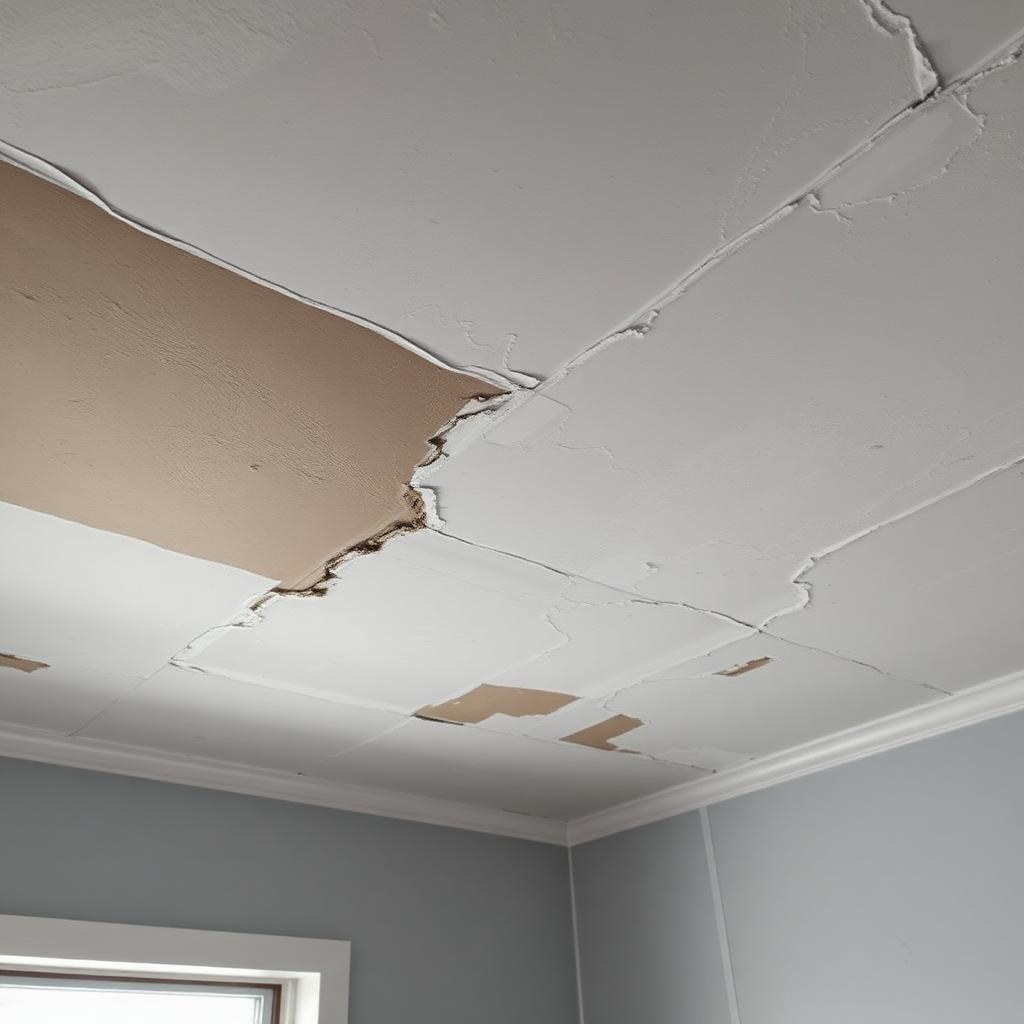 Before
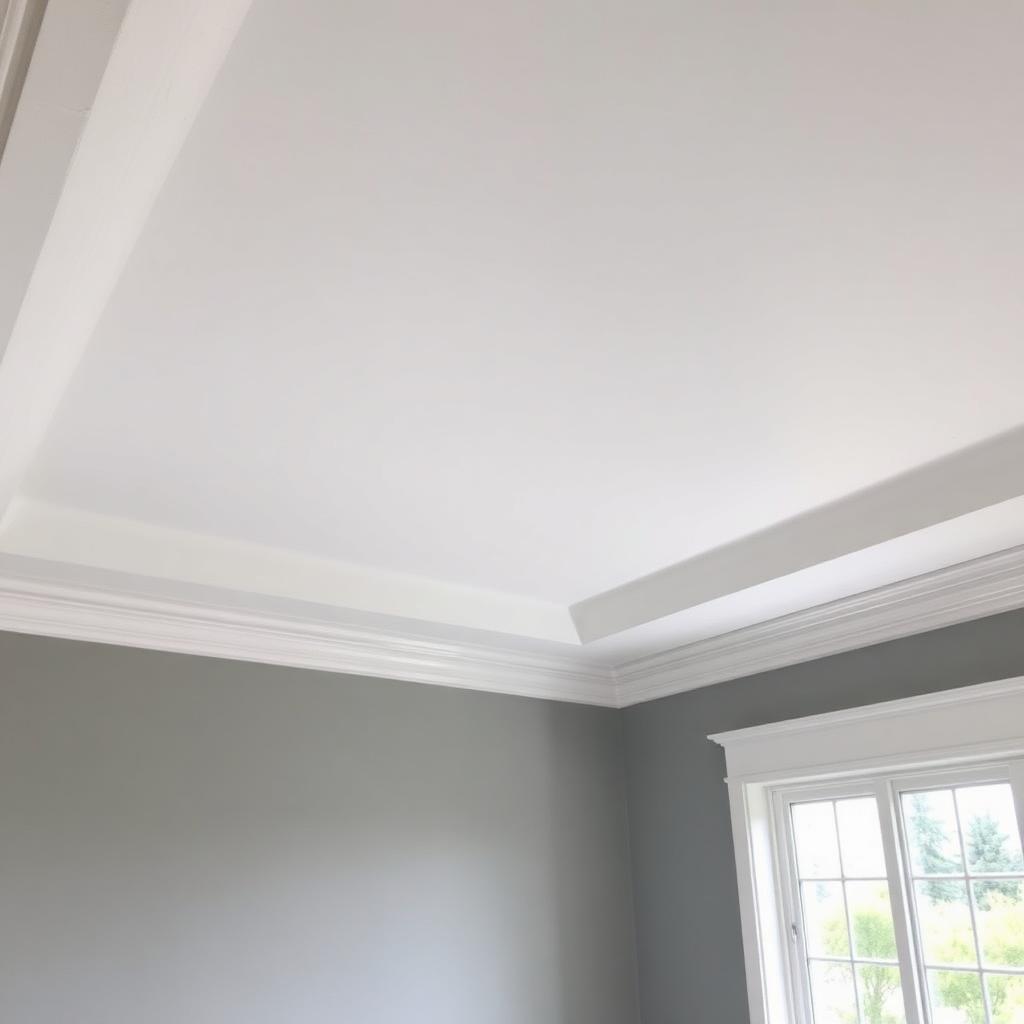 After
AfterWhen to call
Signs your ceiling needs a repair
Cracks along where the ceiling meets the wall
Fine cracks running along ceiling edges are often truss-uplift movement, and they're especially common in Colorado Springs where temperature swings make framing shift with the seasons. They reopen after a quick caulk job, so they need a repair that allows for movement.
Nail pops, sagging, or a bowed panel
Small circles pushing through the paint mean fasteners are backing out, and a panel that bows between joists is losing its hold on the framing. Both are structural before they're cosmetic — the drywall needs to be re-secured before any finishing work goes on top.
Water stains or soft spots overhead
A brown ring or a spot that gives when you press it means moisture has already passed through the board. The source needs checking, the compromised section comes out, and the area gets sealed before texture and paint go on.
Ceiling repair questions, answered
Why is ceiling repair harder than wall repair?
Light rakes across a ceiling at a different angle than it does a wall, which means even a slight ridge or mismatched texture becomes obvious fast. Ceilings also have to be properly fastened to the framing above them, so a repair needs to hold structurally, not just look fixed.
What causes most ceiling damage in Colorado Springs homes?
We commonly see truss-uplift cracks along the edges of ceilings, which happen as the framing shifts slightly with seasonal temperature swings, along with nail pops, water stains from roof leaks, and cracking related to foundation settling. The area's dry air and big day-to-night temperature changes tend to make these issues more common here than in milder climates.
Can you fix a sagging or cracked ceiling, or does it need full replacement?
Often it can be repaired without full replacement. If the issue is a few popped nails or a stress crack from normal seasonal movement, we can re-secure the drywall and repair the visible damage. Full section replacement usually only comes up with water damage or long-term structural sagging.
Will the repaired area be noticeable from the floor?
Our goal is for it not to be. We apply thin coats, sand between each one, and extend the texture blend out across a wide enough section that there's no visible line, even when the ceiling catches direct light from a window.
Related services
Other drywall work we handle
Ceiling damage often shows up alongside one of these. See all of our Colorado Springs drywall repair services.
- Drywall Patching Colorado Springs
- Texture Matching Colorado Springs
- Water Damage Repair Colorado Springs
- Popcorn Ceiling Removal Colorado Springs
- Commercial Drywall Colorado Springs
Get a free ceiling repair quote
Send a few details — or a photo of the crack or stain — and we'll follow up the same business day with a free estimate. Call directly if water is actively coming through.
719-359-5208